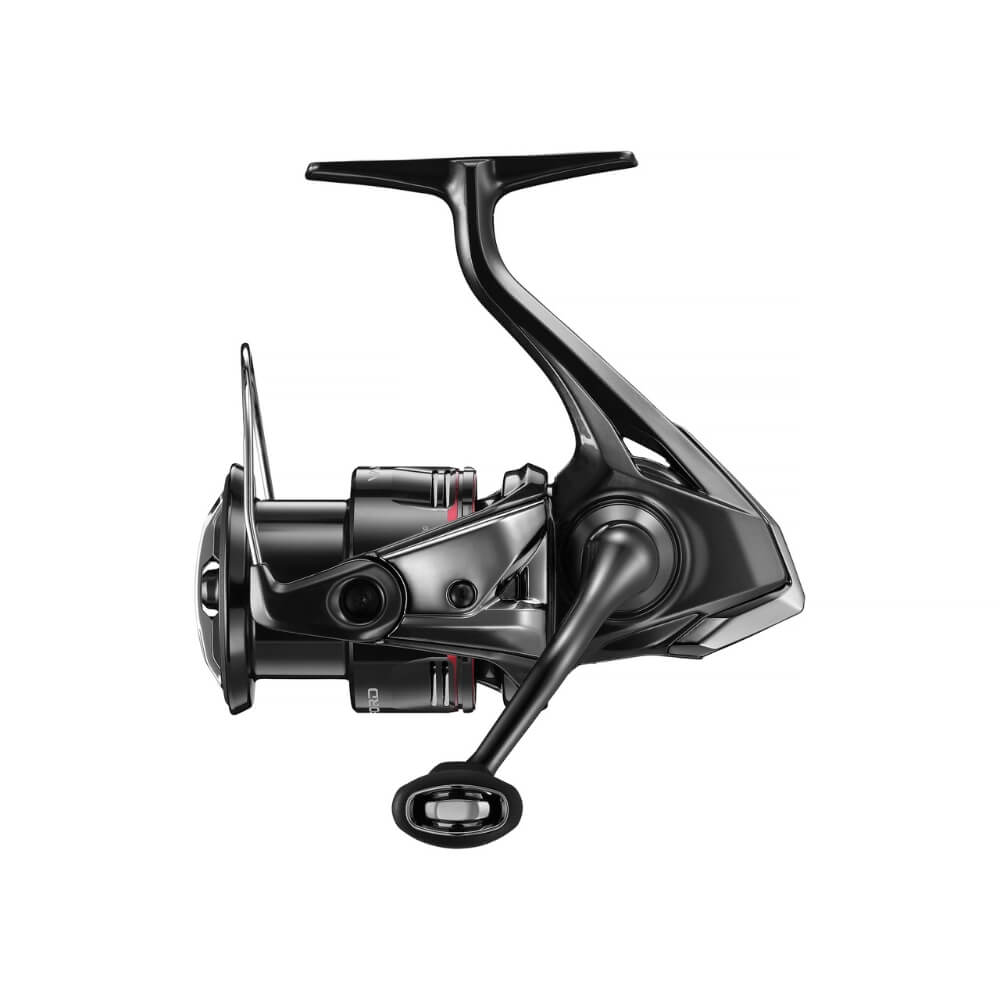
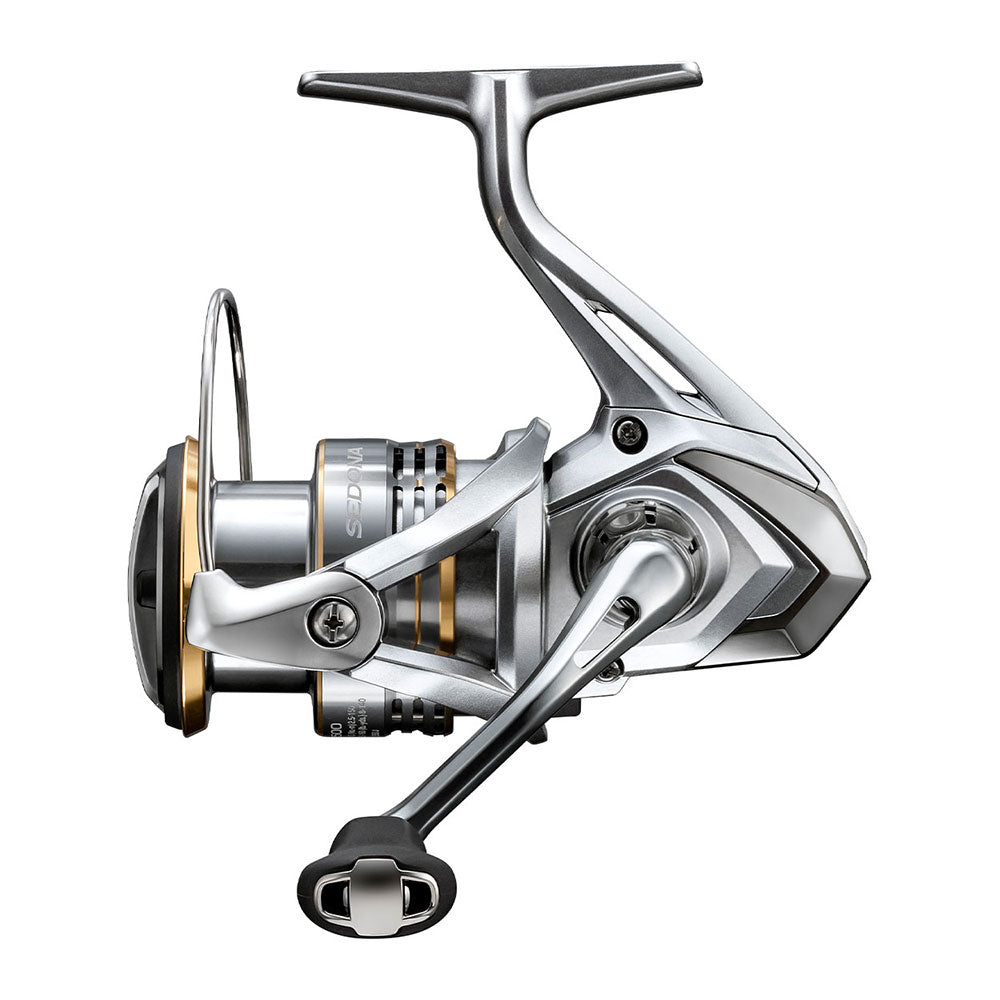
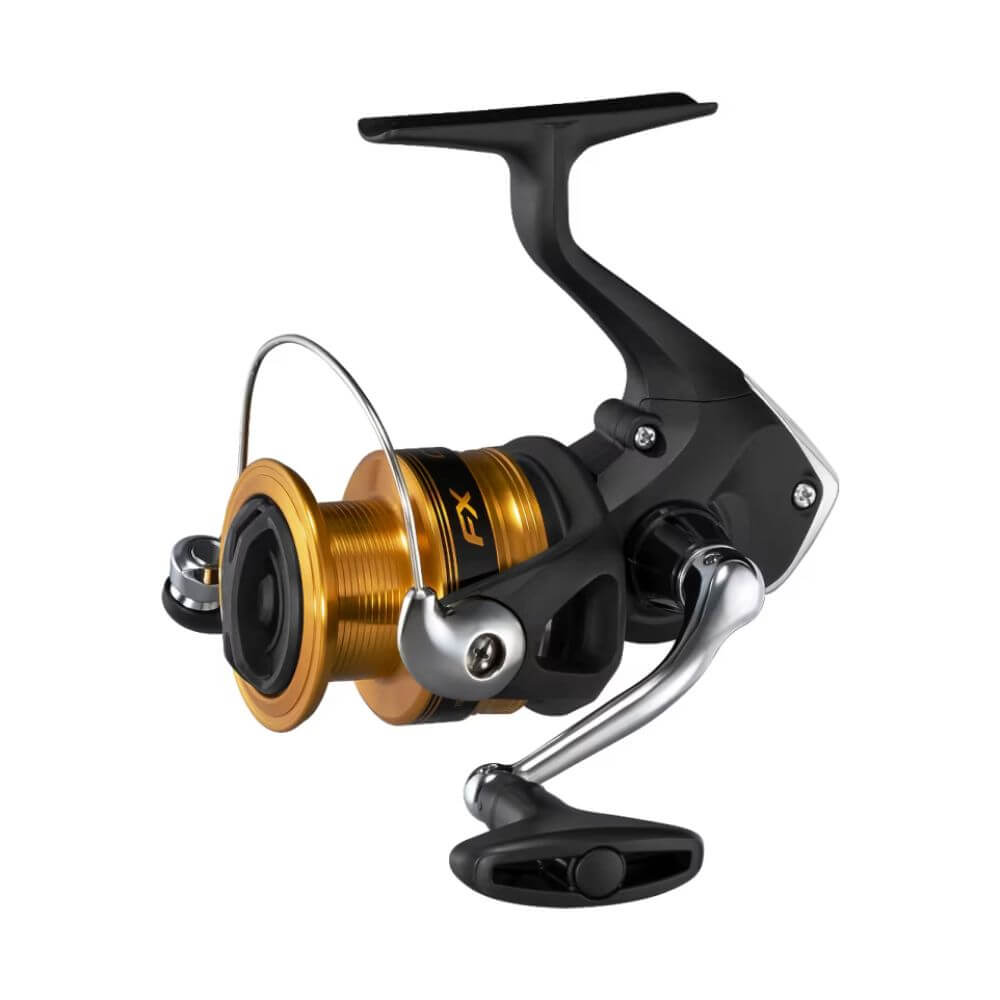
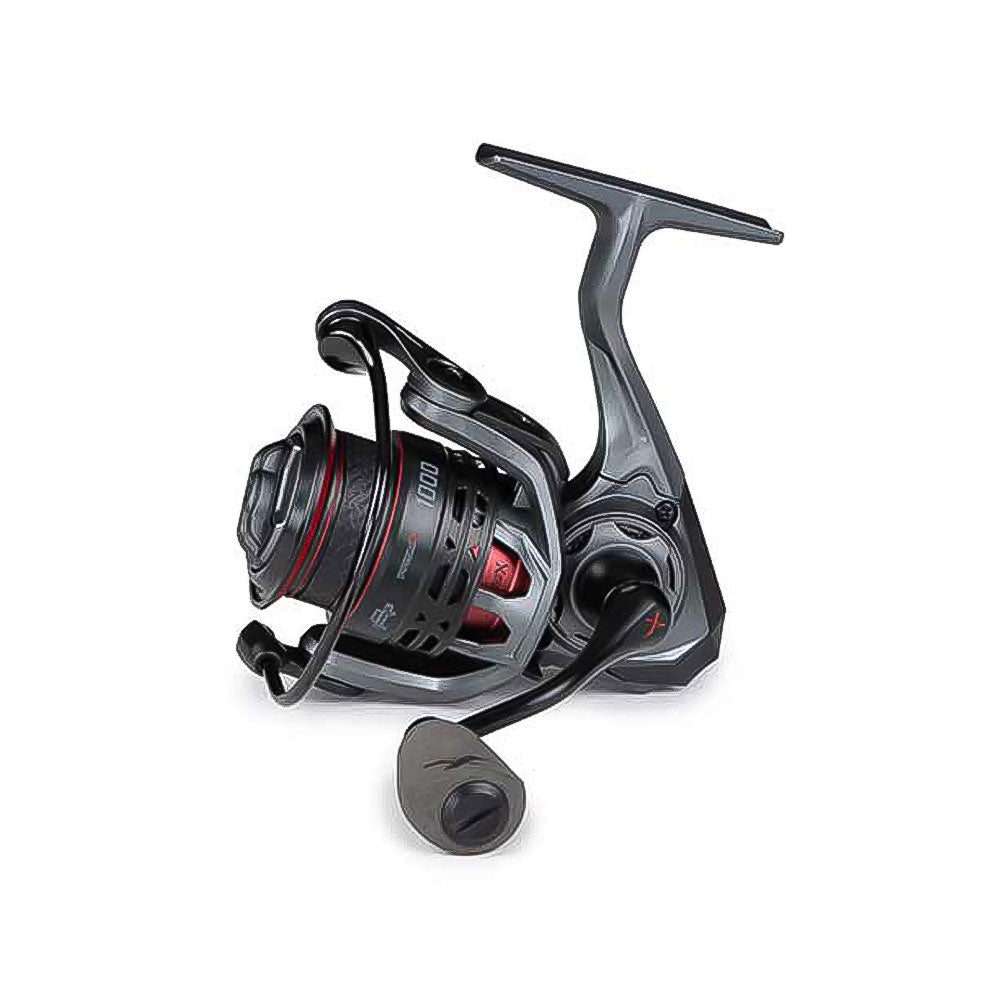
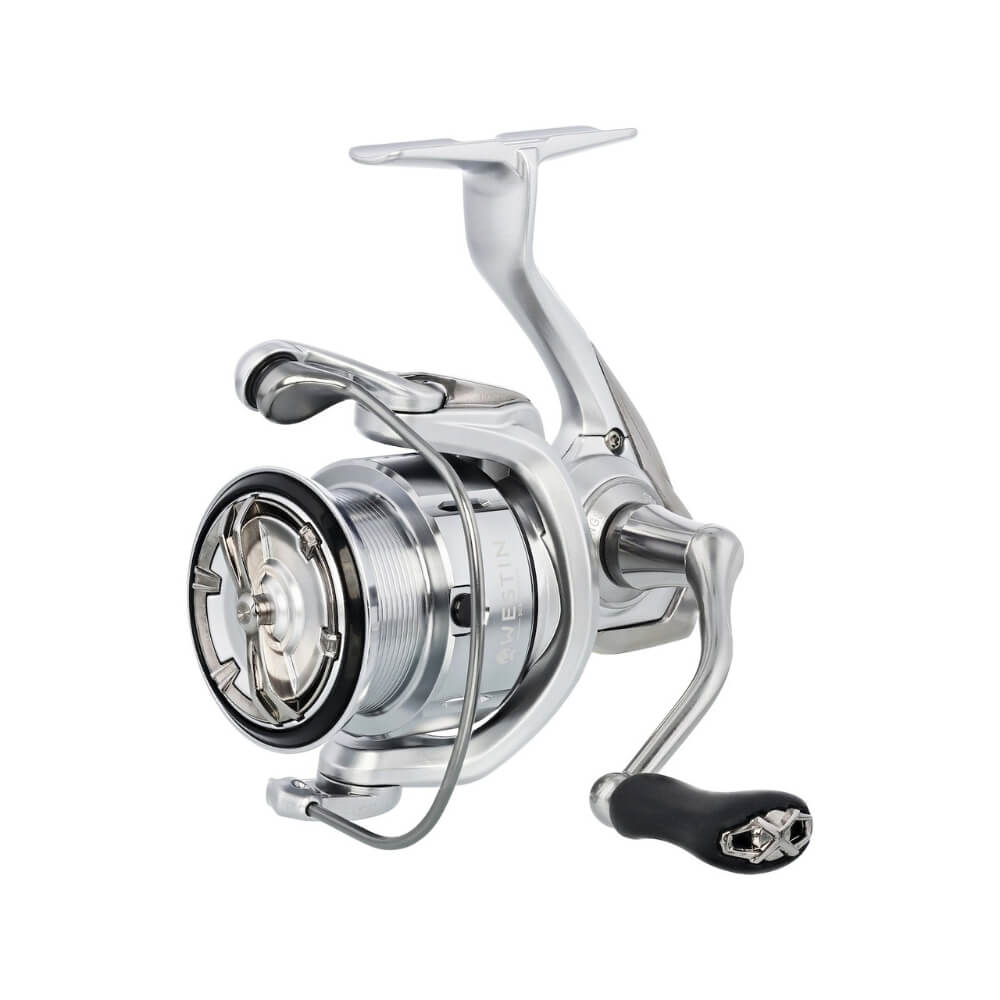
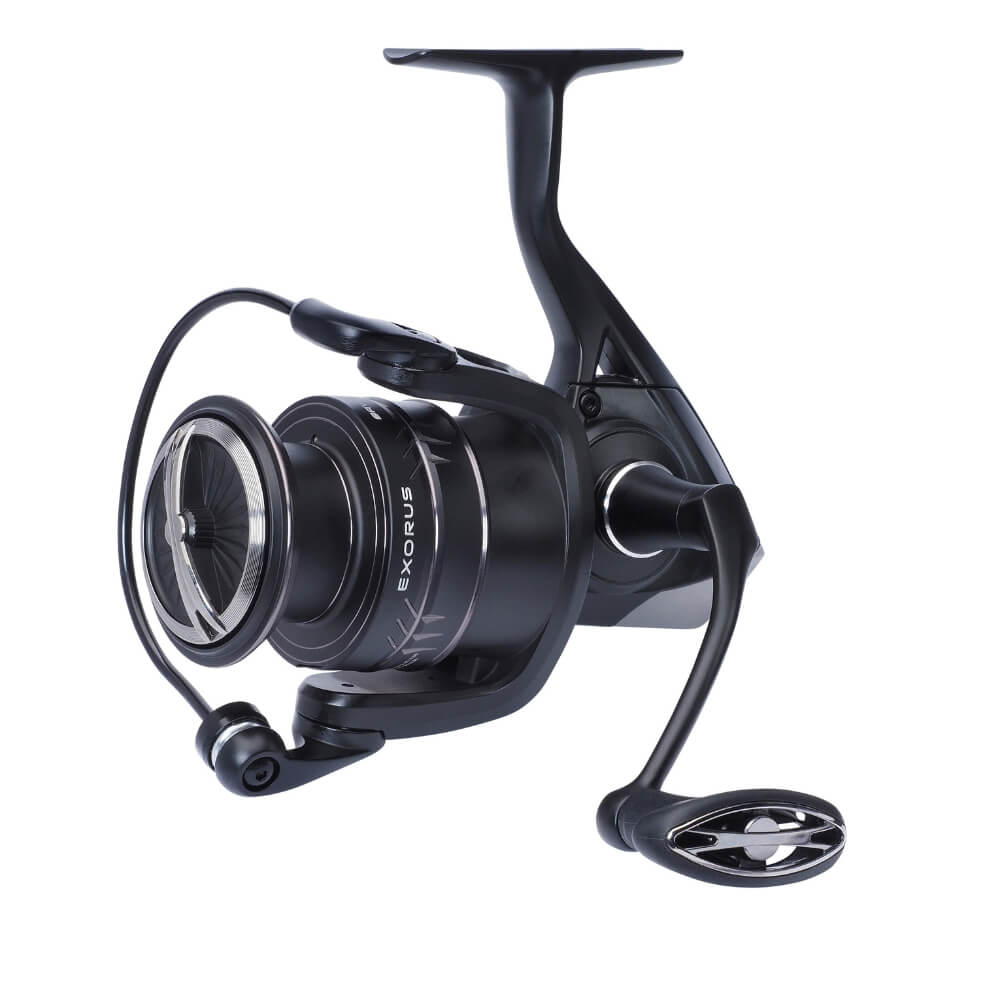
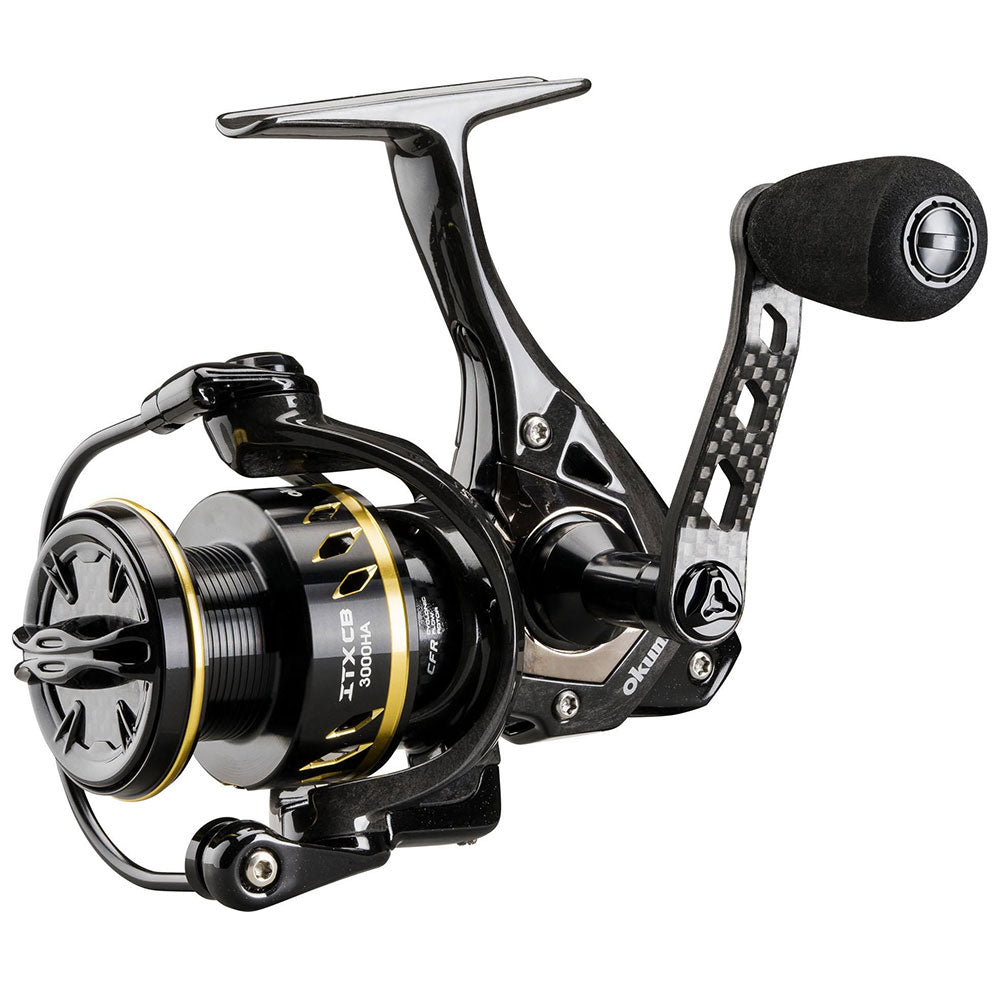
<h2>Buying Guide: Fixed Spool Reels</h2><p>The fixed spool reel is one of the centrepieces of your tackle. Because you are always on the move and lures need to be worked constantly, the reel plays a far more central role in lure fishing than it does in most other techniques. <strong>Casting performance, retrieve feel, line lay and drag performance</strong> should all be at a high level.</p><p>Weight, ergonomics and durability under sustained use across different waters are equally important factors to consider when choosing a fixed spool reel, if you want to get the most out of this style of fishing.</p><h3>Line Capacity</h3><p>The line capacity of a fixed spool reel determines where and how you can use it. When fishing for perch with light lures, you can get by with roughly 70-80 metres of line in theory and in practice. When lure fishing for wels catfish or hard-fighting saltwater predators, or fishing cold saltwater and great depths, you will need considerably larger fixed spool reels with a higher capacity.</p><p><strong>The table below should give you a useful guide to choosing the right reel size for your preferred application:</strong></p><table><tbody><tr><td><strong>Reel size</strong></td><td><strong>Application</strong></td></tr><tr><td>500 - 2000</td><td>Perch, trout, ultralight fishing</td></tr><tr><td>2500 - 3000</td><td>Perch, zander, asp, light pike fishing</td></tr><tr><td>3500 - 4000</td><td>Pike, coalfish, cod, light saltwater fishing</td></tr><tr><td>4500 - 5000</td><td>Pike, wels catfish, Norway</td></tr><tr><td>5000 - 8000</td><td>Wels catfish, halibut, tropical saltwater</td></tr></tbody></table><p>On the subject of line capacity, it is worth noting that the figure commonly quoted in metres of mono is increasingly outdated, since braid is now used in almost all situations. Many reel manufacturers now quote capacity in metres of PE line, and this is appearing on more and more line packaging as well - it gives a much more practical reference point.</p><p>In general, many reels have a higher capacity than you would ever realistically fill with braid, since very few applications require more than 150 metres of line on the spool. (For wels catfish fishing, saltwater work and lure fishing for salmon, your reel should be fully loaded with braid.) In other cases, it makes sense to use cheaper line as a <em>backing</em> beneath your main braid.</p><h3>Line Lay</h3><p>Line lay is one of the most important criteria of any fixed spool reel. If a reel does not lay line cleanly, you will almost inevitably get wind knots and tangles when using thin braid - something that will quickly take the enjoyment out of lure fishing. The line should be laid evenly and in a cross pattern from the top to the bottom of the spool, without <em>peaks and valleys</em>. Different manufacturers solve this in different ways.</p><p>The cleanest line lay is achieved with a so-called <em>Worm Shaft System</em>, though <em>S-Curve</em> and other systems also wind line very neatly. To fine-tune the lay when using different line diameters, many manufacturers include small shims that allow you to adjust the position of the spool on the shaft and achieve a perfect line lay.</p><h3>Drag</h3><p>The drag on your fixed spool reel protects your rod and line from damage and allows you to play a hooked fish safely. If the force during the fight exceeds the breaking strain of your line or the limit of your rod, something will give way - either the line breaks or the rod does. The drag should release line smoothly and consistently before that point, absorbing peak loads. A smooth drag with sufficient braking force makes it possible to play even hard-fighting fish with confidence.</p><p>The drag setting should always be matched to your line strength and its breaking strain. Maximum drag figures in kilograms are now quoted by many reel manufacturers, but bear in mind that these are maximum values which cannot realistically be applied in practice. As a rule of thumb, around two thirds of the stated maximum drag force is what you can actually make use of on the water.</p><h3>Ball Bearings</h3><p>To keep a fixed spool reel running as smoothly as possible, ball bearings are needed at several critical points to reduce friction. At a minimum, you should have ball bearings in the following locations:</p><ul><li>Either side of the main gear</li><li>At the pinion gear</li><li>In the line roller</li><li>As an anti-reverse bearing (roller bearing)</li></ul><p>A fixed spool reel should therefore have at least 4 ball bearings plus a roller bearing. Additional ball bearings can improve the smoothness of the reel further, or may be fitted in the spool or on the shaft to optimise the drag. One or two ball bearings in the handle can also be worthwhile, making cranking under load noticeably easier.</p><p>Beyond 15 ball bearings, there is no meaningful benefit in any fixed spool reel. More important than the number is the quality of each individual bearing. If you plan to use your reel in salt or brackish water, make sure that corrosion-resistant or stainless bearings are fitted. These are referred to by designations such as CRBB, ARB, SS, SWR or HPB.</p><h3>Gearing</h3><p>The gearing of a fixed spool reel must withstand high loads and should have tight tolerances. Too much play in the handle or the gears will quickly spoil your fishing and shorten the life of the reel. Reel gears are made from a range of materials. Among the best and most robust are aluminium, brass and stainless steel. More affordable reels typically use zinc alloy gears, which can also be long-lasting when manufactured to a good standard. Gear components can be cast, machined or cold-forged. Machined and forged gears are stronger and usually lighter than cast gears of the same size, and tighter tolerances are achievable, giving a more refined feel when cranking.</p><p>Gear ratio is also an important consideration when choosing your reel. For jigging and fast retrieves with lures that offer relatively little water resistance, a higher gear ratio (5.7:1 - 6.4:1) works very well, as you can take up line quickly. For lures that generate high water resistance and therefore significant back-pressure, a lower gear ratio (4.3:1 - 5.2:1) is more suitable - there is less <em>start-up resistance</em>, which can become tiresome with a fast reel paired with the wrong lure. Slower gear ratios also suit lures that are worked at a slower pace, such as spoons or crankbaits. If you want a reel that covers as wide a range of situations as possible, a mid-range gear ratio (4.7:1 - 5.2:1) is the best all-round choice.</p><h3>Reel Body</h3><p>Fixed spool reels are made from a variety of materials, which have a strong influence on both weight and rigidity. Entry-level models use plastic bodies, which sit somewhere in the middle in terms of weight but offer relatively little torsional stiffness - the reel <em>flexes</em> under load, and the gears shift laterally, which accelerates wear. Better and lighter are bodies made from fibre-reinforced plastics, and there are several grades of these. The best are carbon-fibre-reinforced composites, recognisable under various trade names such as Ci4+, Zaion and C-40X. These materials twist very little, are extremely light, provide an excellent fit for the gearing, and are fully corrosion-proof. More rigid still, though slightly heavier, are aluminium bodies, with <em>marine-grade aluminium</em> particularly suited to reel construction. This material is primarily used in reels that are subjected to very high forces - tropical saltwater popper fishing or fishing for halibut and wels catfish, for example.</p><p>The premium option is a magnesium body. Magnesium is exceptionally light and comparably rigid to aluminium - in many ways the ideal material for freshwater reels. Without appropriate surface treatment, however, it is not suited to saltwater use, as it corrodes relatively quickly. Magnesium is also a costly material, which is reflected in the price of the reel.</p><p>As a general principle, the fixed spool reel should suit the rod. While you cannot truly balance a rod via the weight of the reel, a reel that is too heavy or simply too small will often feel unbalanced and get in the way during lure fishing, where precise lure control and hours of casting and retrieving demand a well-matched outfit.</p>